I’m so excited this week to see my daikon radishes coming up! These are old seeds. I bought these a few years ago and forgot them “stored” them in a closet after they didn’t produce any radishes. Planting these this time around was basically just something to do while I waited for more seeds to arrive. I wasn’t expecting them to do anything, so it’s been a thing of beauty to see these little sturdy squat sprouts coming up.
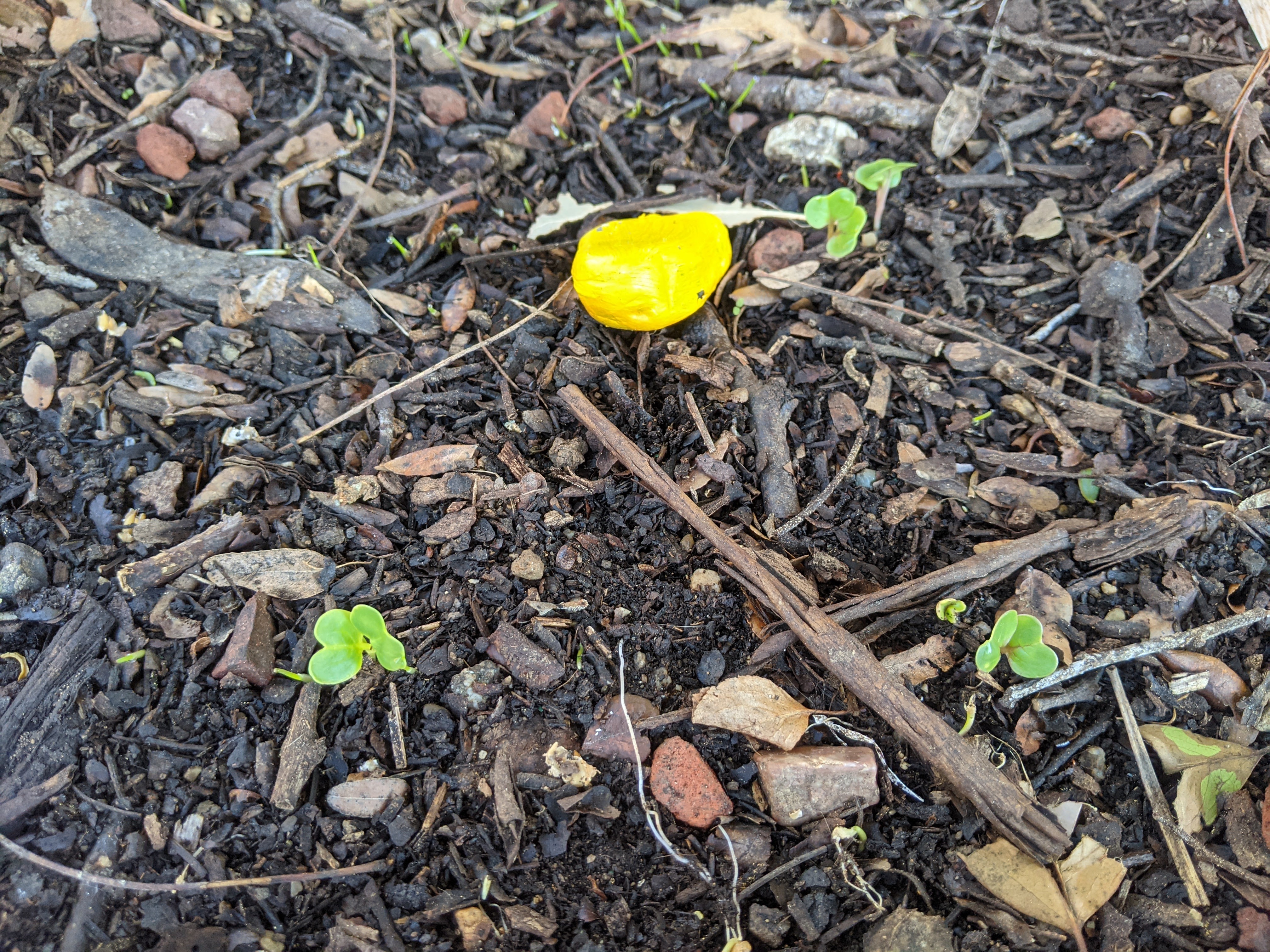
Meanwhile in the garden, the winter wheat that I spread twelve days ago is also coming up. And the sprouted peas I planted seem to be doing just fine despite the frost.
So why is about a third of my garden barren? I’ve been watching things pretty closely. As I learn more about the sun requirements of plants, I’ve been making mental adjustments to what I put where in the garden. I’ve also been scoping out the spots in my hard that are sunny for more of the day. I’m beginning to day dream about a spiral shaped garden right in front of my kitchen window, but I’ll save that for another day.
I’m new to gardening, so I guess an experienced gardener would have looked at the yard pretty closely before choosing where to put their garden. I didn’t do that, so I’ve got a big overhanging eucalyptus branch, a scraggly decorative shrub, and the south fence, all of which cast some shade over the garden throughout the day.
But because it’s winter and the sun stays to the south all day long, that fence is totally shading a third of my square feet. Nothing is alive there.
I’ve been reading gardening books recently, and all of them talk about “microclimates” in the garden. Microclimates are areas of your yard that are different from each other in terms of the weather they experience, like sun, wind, rain, and drainage. I had been thinking of these microclimates mostly in terms of topological features because those are the sorts of examples given in my book: a slope, where cold air will drain. A rise with strong winds. A hollow where the cold air pools. My garden is on a flat area that I built on what used to be a slope at the end of the yard. It has a concrete block retaining wall that wraps around two sides of it. I hadn’t been thinking about microclimates in term’s of the sunny patch verses the shady patch, but it turns out there’s a huge difference.
I went out there this morning with my trusty instant read thermometer, and got readings from squares with radish sprouts, and squares without.
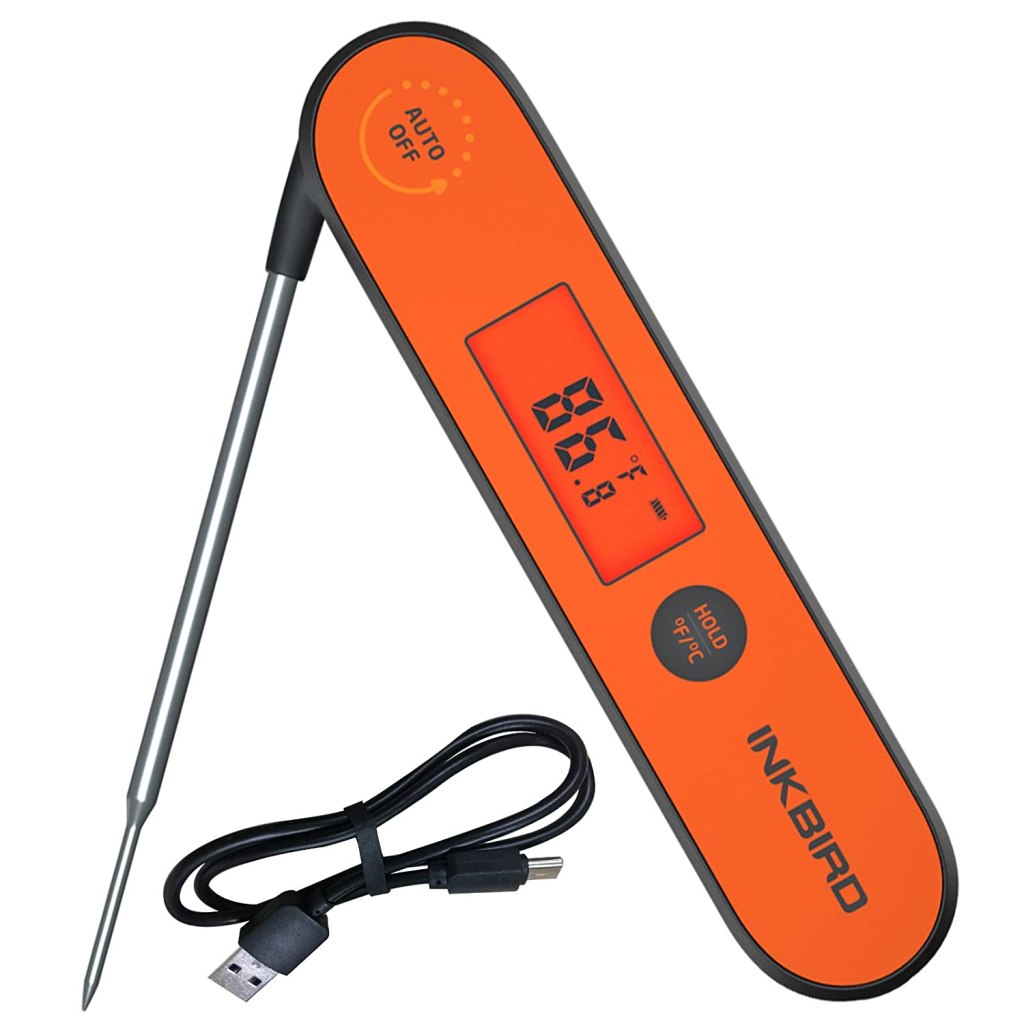
Rechargeable, magnetic, folds for self storage. Measure your steak temperature or your soil temperature.
Here’s what I got:
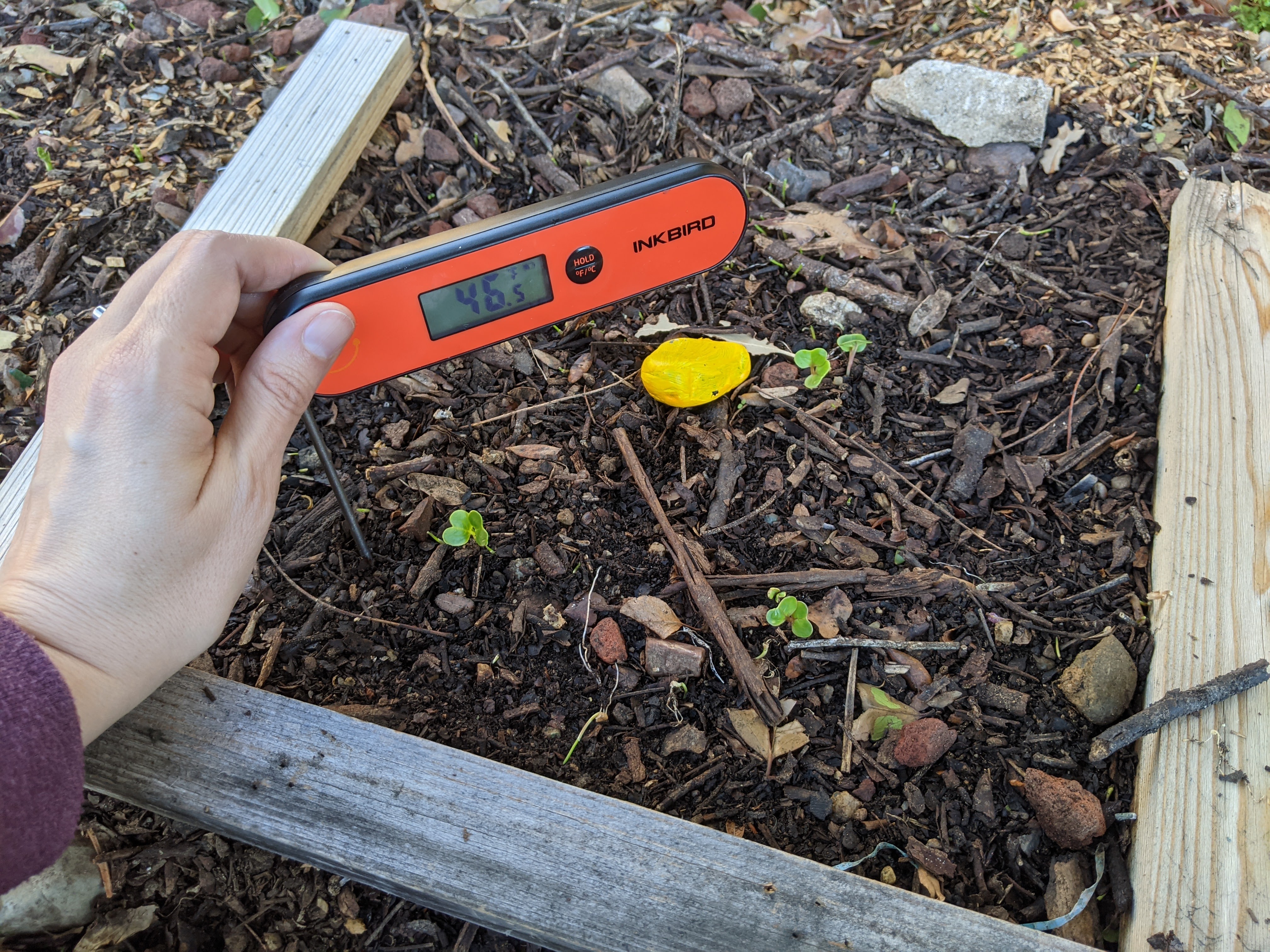
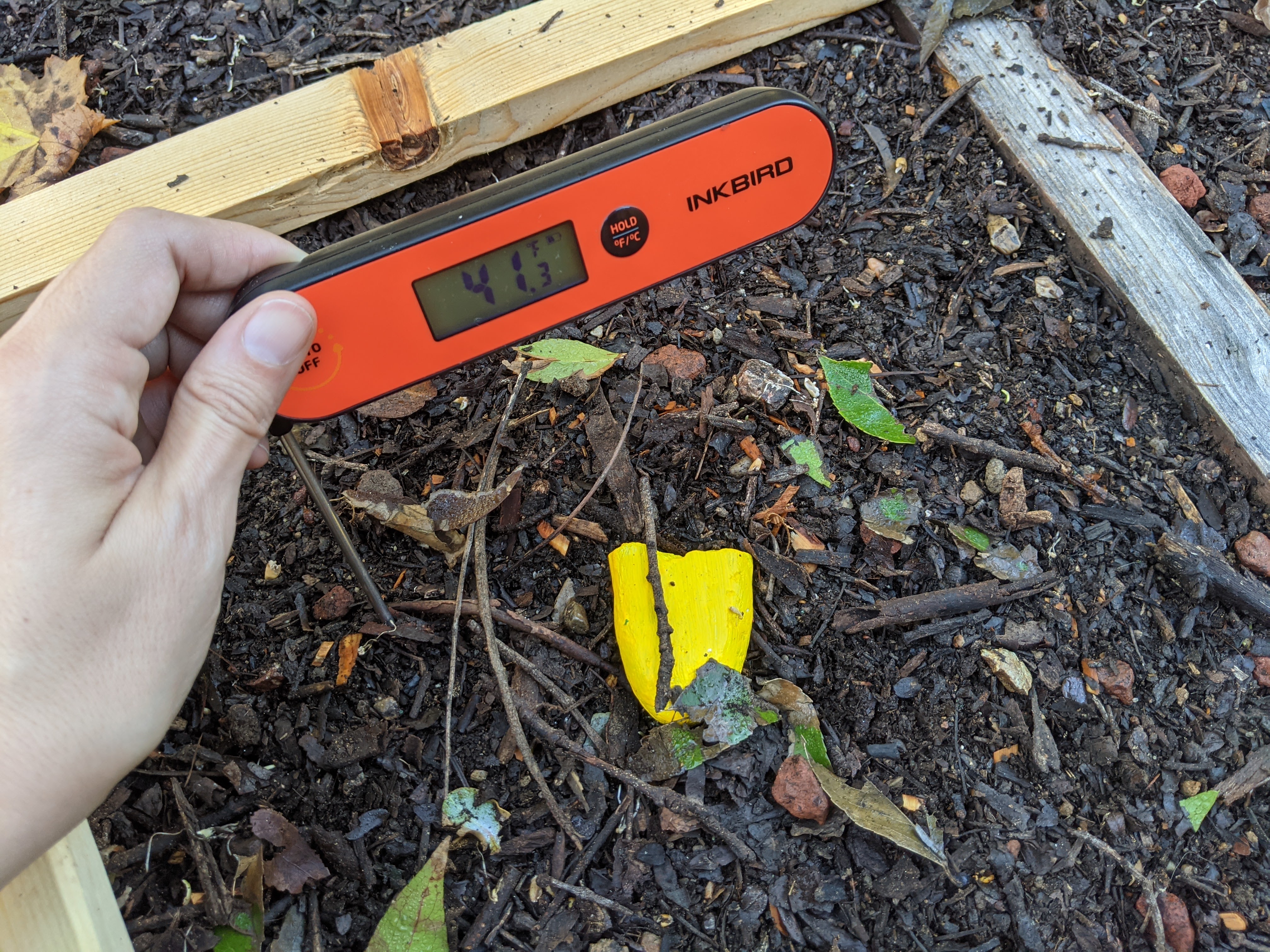
There’s a big five degree difference in temperature between the two spots. Apparently that’s plenty to prevent both the radishes and the wheat from germinating. But does it take that much? I also measured the soil temperature from a square that was a little slower to sprout. It’s between the sunny and shady squares, with about four feet between them, in a part-sun area.
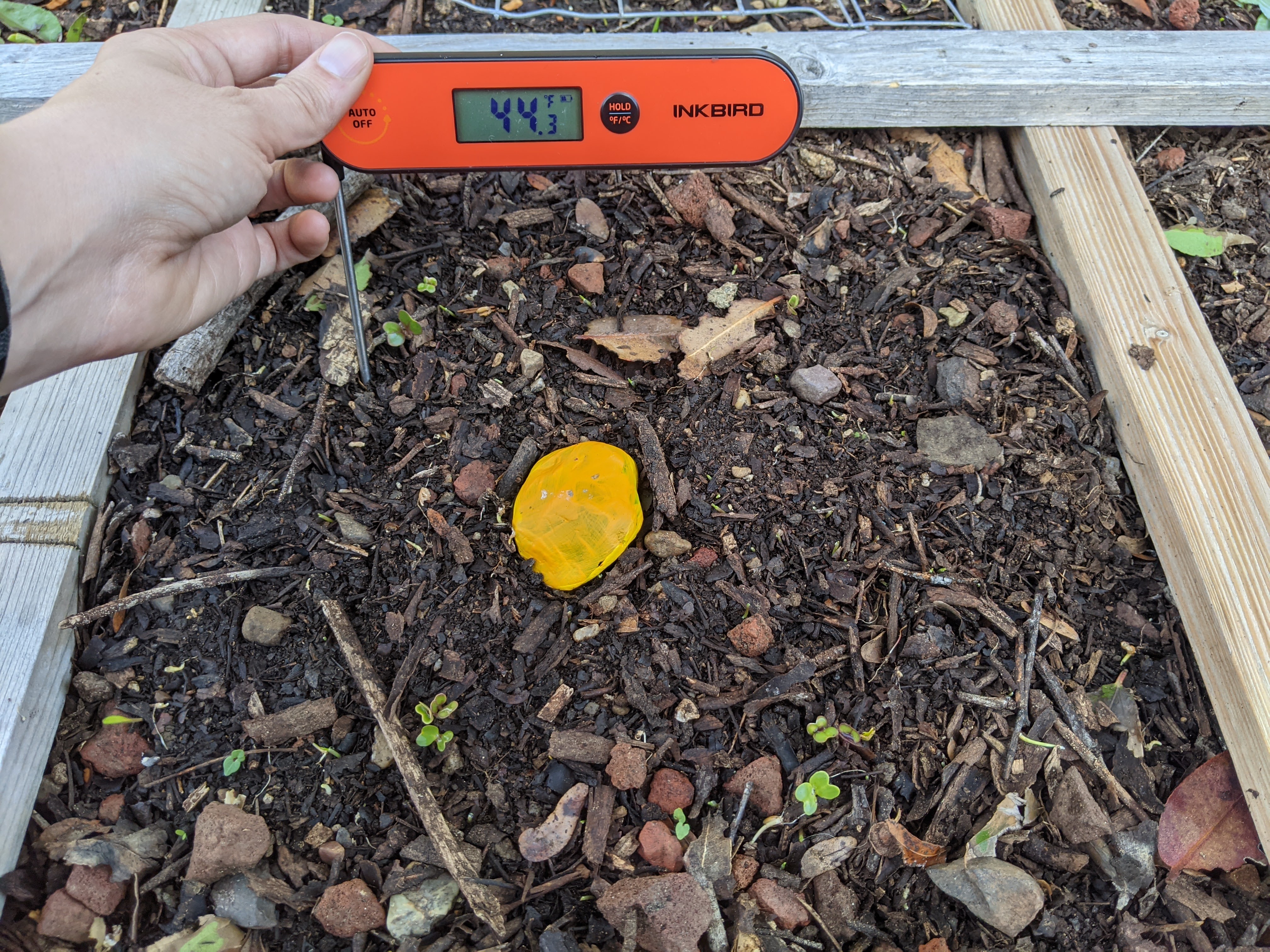
This square is twe degrees cooler than the sunny square at 44.3 degrees Fahrenheit. Enough of a difference to slow down leaves apearing on the surface of the soil, but not enough to prevent germination.
Okay, there can be days between germination and when the leaves pop up over the soil, so I can’t conclusively read this as “daikon germinate at x temperature” because I don’t know if the shady square daikon have germinated and I didn’t test the soil temperature until today.
What we can take away, is that a shady fence line will absolutely affect what will grow in an area and when, and that microclimates can affect plant development in a distance as small as four feet. I could probably narrow this down to an even smaller area, which is mind blowing to me.
I know from building the retaining wall that the fence only casts a bout a foot of shade at high noon in the summer, so the fence shouldn’t be a factor affecting the garden much in the summer. In the meantime, I’ll keep an eye on it to see how long it takes for the temperature and seedlings to start to come up.
 Outdoor Hedonist
One Comment Add yours