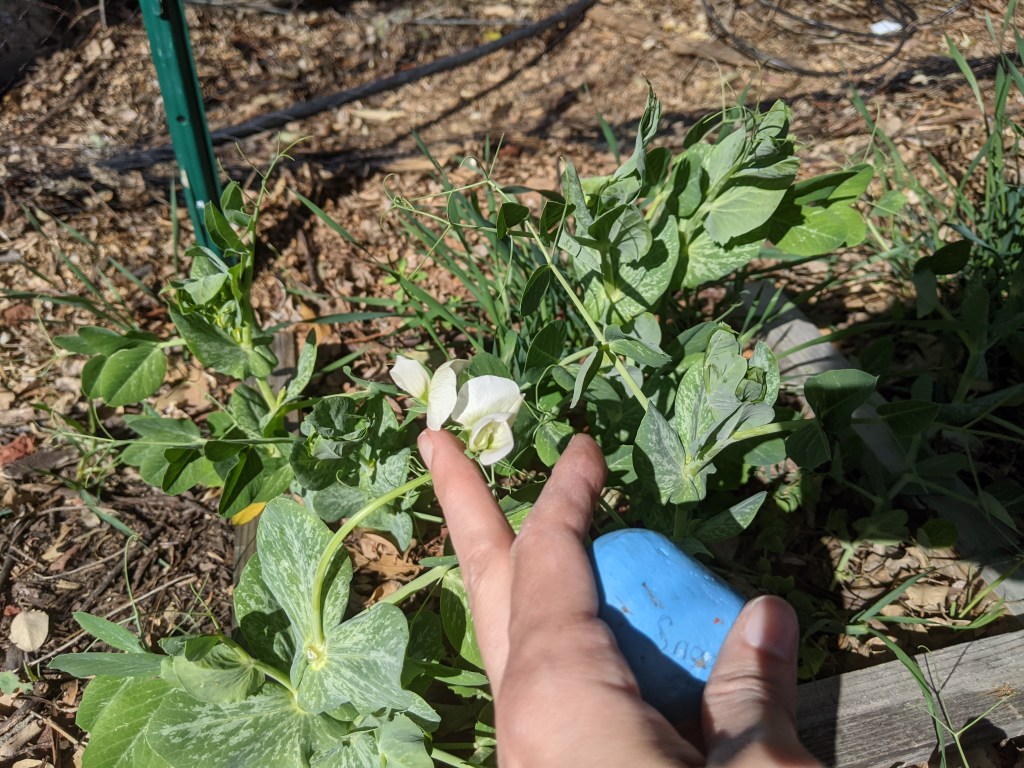
True to its’ name, the first of the pea varieties to bloom is “Snowbird.” I planted one square foot of these and I spotted the first bloom 65 days after sowing my sprouted peas. The packet says “sow in …early spring for first crop” harvest in about 58 days.” Technically, spring won’t happen for another 8 days, so I’d say having planted these in mid-winter in Livermore, California, only slowed them down a little bit as compared to plants sown in spring. And planting these two months early also gave me a giant head start on when I’ll get to eat peas!
These “Snowbird” peas haven’t had the easiest life, since they were badly nibbled down by critters unknown, but it doesn’t seem to have slowed them down too much compared to the other two varieties I planted on the same day. “Burpeeanna” also got badly nibbled and hasn’t bounced back as well as “snowbird” did. “Blue bantam” was the least damaged by predators and is about the size of “snowbird.” I’ve harvested pea shoots from all of these, and there’s a clear winner in the deliciousness department. “Blue bantam” shoots taste like fresh peas, and never make it in to the kitchen before being gobbled up. “Burpeeanna” and “snowbird” don’t have a distinctive pea taste and are just a nice fleshy green for salads, soups or stir-fry without the oxalic acid discomfort of spinach.
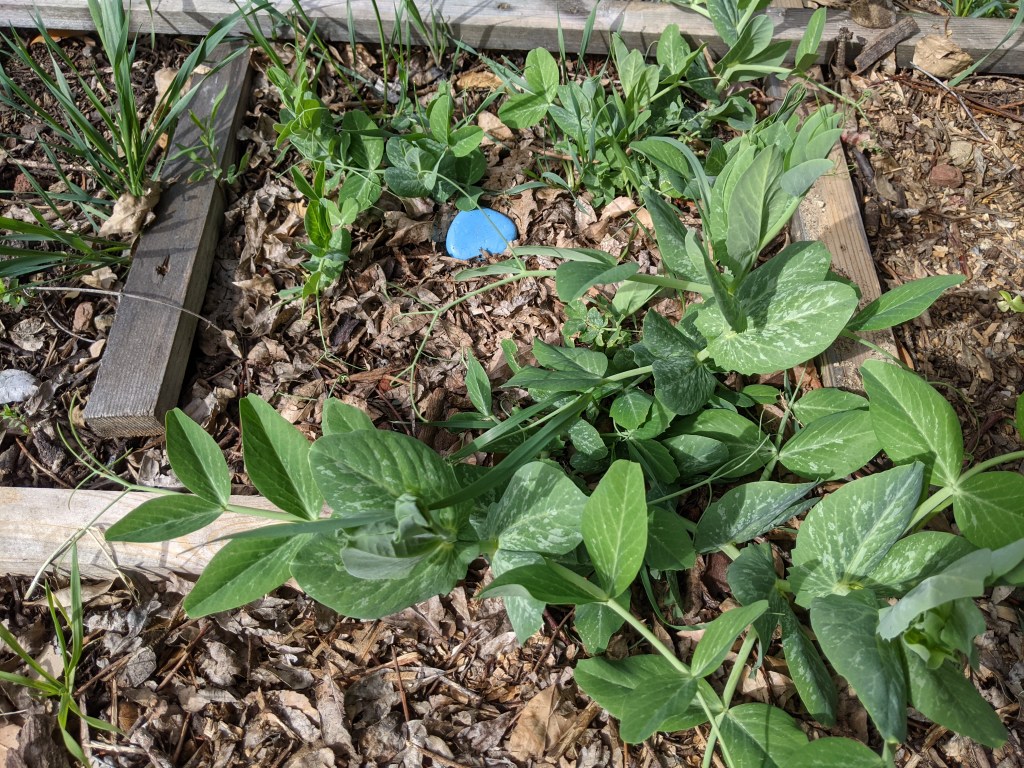
My original plan was to plant peas each week until all my squares were full, but I learned several things along the way that slowed me down. The first thing was that peas should be inoculated if you want to be sure they’ll add nitrogen to the soil (and it was an adventure to find the right inoculant). The second thing I learned from planting daikon seeds throughout my garden was that direct sunlight makes a huge difference to seed germination – and half of my garden didn’t have any direct sun (yet).
Ultimately, I ended up doing a great big pea planting test (over 100 seeds!) and tested inoculated vs. non-inoculated, sprouted vs. not-sprouted, and direct sow in 100% compost top dressing vs. 50% compost/soil mixture. I reported the results for inoculated vs. not inoculated earlier, and ate all of the delicious pea sprouts with my own home ramen-inspired soup recipe.
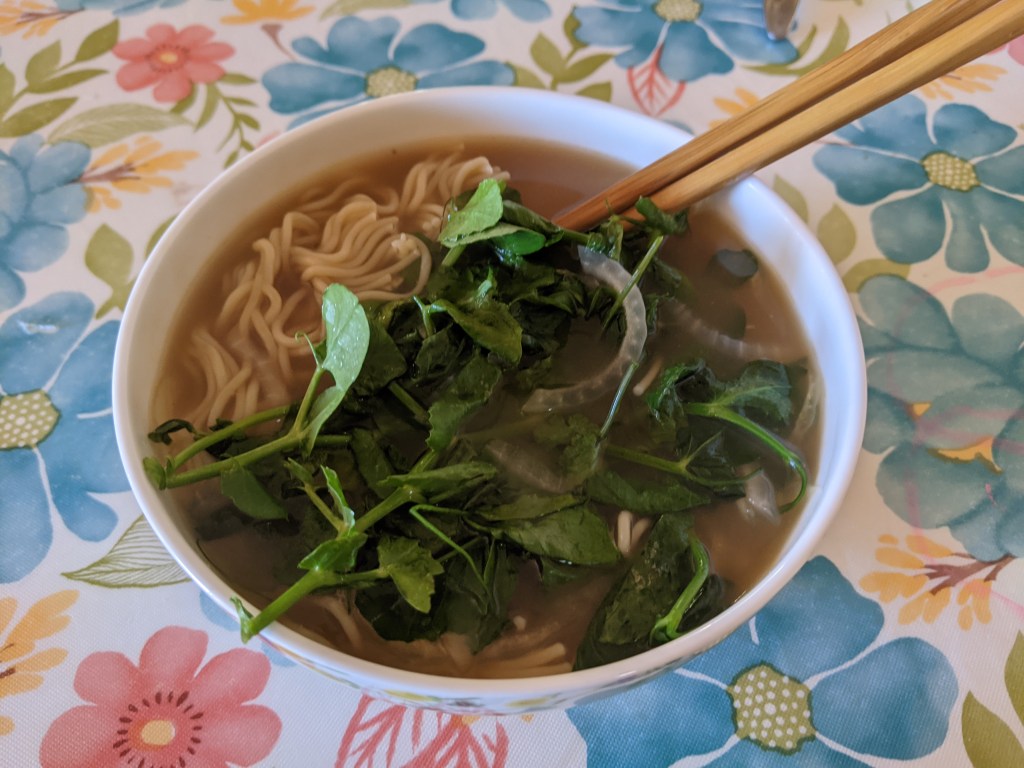
I planted these fairly densely and have been thinning them out and eating the thinned seedlings as shoots. Once I ran out of seedlings to eat, I started harvesting the ends from the remaining plants as well. The stalks can be a bit fibrous. I eat them anyway (carefully chewed), but for a more refined veggie, you could just harvest 3-4 inches from the growing tendrils, snipping off any sections that seem too tough.
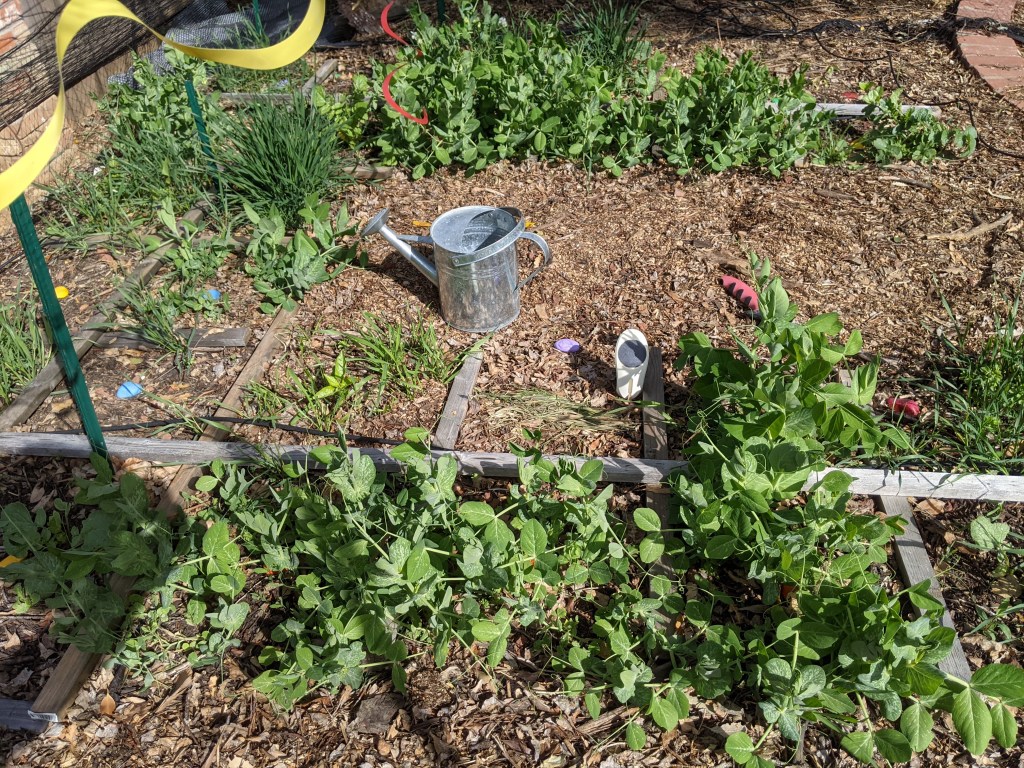
As for current results from the multi-pea challenge… let me check my notes… Yeah, there’s nothing to see here folks. The peas that got planted in warmer soil grew a little faster, but other than that I don’t see much of a difference, whether they were sprouted or planted in compost or any combination thereof. Roughly the same number of seeds in each square foot grew into seedlings and they are all roughly the same size.
The main arguments I’ve read against planting in compost, are that it’s expensive (free in my case) and that the compost is too light to anchor the plant’s roots, so they’ll fall over too easily. Bush peas aren’t heavy plants, like tomatoes, and they grow tendrils to support themselves, so I don’t think I’ll run into issues with them falling over, but I’ll let you know what I find. I’ll probably dig up the soil under a couple of these to see if I can see a difference, but it won’t be today!
I won’t allow all of these plants to set peas because I want to retain the nitrogen they fix in the soil. But for now they’re a nice fresh garden addition in the kitchen and a lovely bit of green to look out on in the garden.
Sprouting them before planting didn’t help them or hurt them. Growing them directly in compost didn’t make a difference either. Since this blog is all about learning the laziest way of gardening, I can say that for the future, I’m definitely comfortable direct sewing in whatever soil I have.
 Outdoor Hedonist